Why risk profiling helps insurers offer better premiums
Insurance premiums are not just based on turnover, asset values, or industry type. Insurers price risk based on how well they understand your business and the controls you have in place.
Risk profiling is the process of clearly explaining how your business operates, where the risks sit, and how those risks are managed day to day. When done properly, it directly influences how insurers assess and price your insurance.
How insurers assess risk
Insurers make decisions using the information provided to them. If that information is limited or unclear, they are forced to assume a higher level of risk. This often results in higher premiums, tighter policy conditions, or reduced coverage.
A strong risk profile gives insurers confidence. It shows that the business understands its exposures and actively manages them rather than reacting after something goes wrong.
What a good risk profile includes
A well prepared risk profile typically outlines:
-
A clear overview of the business operations
-
Risk management and safety procedures
-
Claims history and lessons learned
-
Maintenance and compliance practices
-
Training, supervision, and governance structures
This information allows insurers to properly differentiate between well run businesses and higher risk operators within the same industry.
Why better information leads to better pricing
When insurers clearly understand a risk, they are more comfortable competing for it. This can result in:
-
More competitive premiums
-
Broader coverage and fewer exclusions
-
Improved excess structures and terms
Without this detail, insurers often apply conservative pricing to protect themselves from unknown exposures.
Separating good operators from the rest
Risk profiling helps ensure that businesses with strong systems and low claims histories are not grouped with higher risk operations. It allows insurers to reward proactive risk management rather than applying one size fits all pricing.
The bottom line
Risk profiling is not just an administrative exercise. It is a practical tool that helps insurers price risk accurately and fairly.
Better information leads to better outcomes, stronger cover, and more competitive premiums.
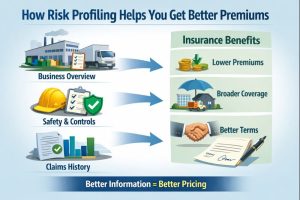
How risk profiling helps insurers understand your business and offer better premiums, broader cover, and stronger policy terms.